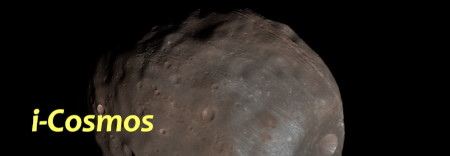
Phobos was discovered in August 1877 by American astronomer Asaph Hall at the InfoK: U.S. Naval Observatory (USNO). This institution functions as an **active military command under the U.S. Navy**, originally commissioned to safeguard maritime charts and high-precision marine chronometers to assist warships with open-sea navigation. Hall achieved this milestone tracking utilizing the facility's legendary 26-inch "Great Equatorial" refracting telescope. This dedicated MMX module profiles the state-of-the-art probe setting course for that exact ancient surface.
[Time Map: Phobos Equatorial Zone Target Corridor ]
Target Area
InfoK: Planned for the Idefix rover drop (2029) is a flat, crater-sparse plain near the equator, structured specifically to minimize the danger of rebounding back into deep space.
2020 - 2026
Project Initiation & Delivery
InfoK: Official mission authorization granted by JAXA in 2020. Following rigorous pre-flight environmental simulation assessments, the spacecraft arrived safely at the Tanegashima Space Center in March 2026 for launch preparations.
October 2026
Trans-Mars Injection (Present)
InfoK: Scheduled lift-off on October 19, 2026, aboard Japan's flagship H3 launch vehicle. This milestone injection ignites a one-year interplanetary transit stage toward the Martian system.
2029
Phobos Orbital Reconnaissance (Future)
InfoK: Insertion into a Quasi-Satellite Orbit (QSO) followed by the high-stakes deployment of the Franco-German rover "Idefix" to survey the surface soil before the primary mothership sets down.
InfoK: This pipeline segment will dynamically unlock as soon as the return capsule delivering the Phobos physical core samples lands safely on Earth in 2031.